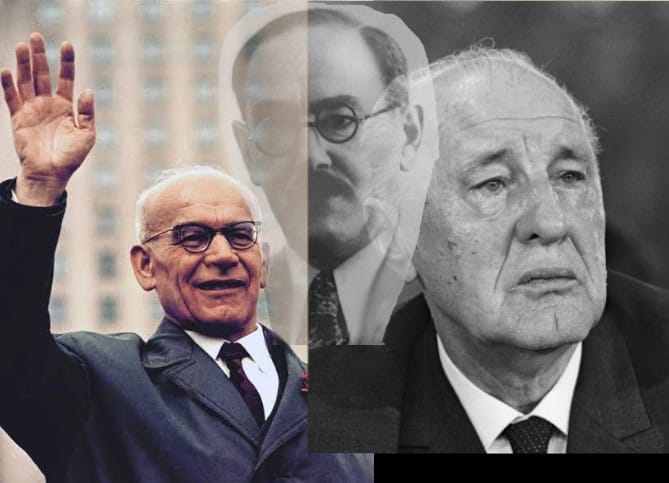
On the morning of 23 October 1956, the Hungarian party daily Szabad Nép printed Władysław Gomułka’s speech under the headline “Democratisation is the only way”. That afternoon Budapest students marched to the Bem statue in solidarity with the Poles, and by evening the first shots had been fired at the Hungarian Radio building. In Warsaw, Khrushchev eventually backed down; in Budapest, Soviet tanks had the final word.
In his article published on Szamizdat, Attila Apor asks why Poland escaped what Hungary did not, what role China played, and what the “national road” to socialism meant in 1956. The article also follows the two protagonists over the following years: Gomułka, the hope of 1956, fell in 1970 as a leader with blood on his hands, while János Kádár, who had returned with Soviet tanks, won broad acceptance by the end of the 1960s.
Read the article (in Hungarian): Fordulópontok 1956-ban – Gomułka, Kádár és a szocializmus nemzeti útjai
Image: Szamizdat