The Legacy of 1956

Today the international conference “Shared Experiences – Different Paths? The Turning Point of 1956” opens at the Pilecki Institute in Warsaw. Over three days, Polish, Hungarian and other Central European historians will examine how 1956 shaped the paths of the countries of the region. Attila Apor, founder of the workshop, speaks in the first session…

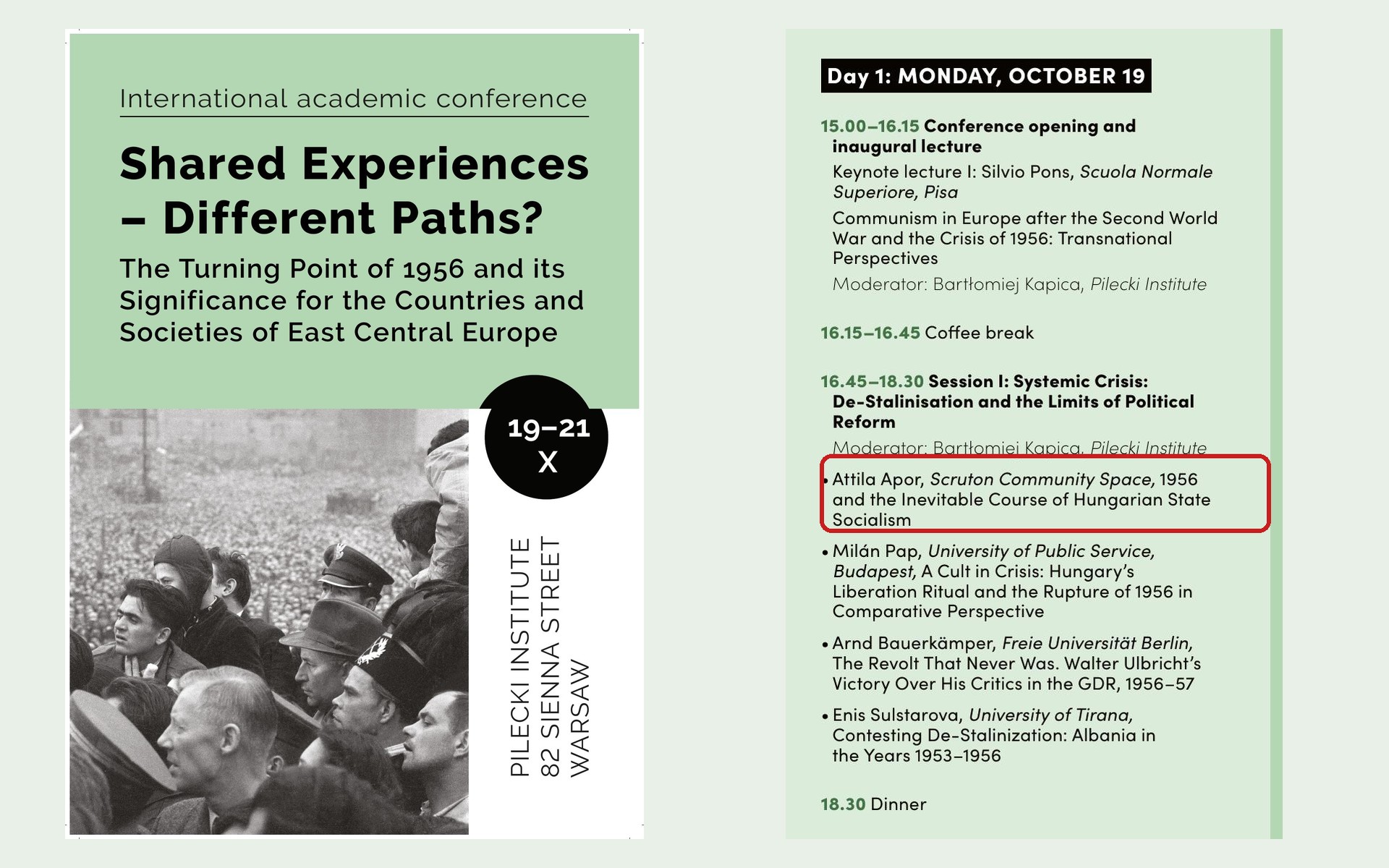
A konferencia borítója és az első nap programja, kiemelve Apor Attila előadásával

Today the international conference “Shared Experiences – Different Paths? The Turning Point of 1956” opens at the Pilecki Institute in Warsaw. Over three days, Polish, Hungarian and other Central European historians will examine how 1956 shaped the paths of the countries of the region.

Attila Apor, founder of the workshop, speaks in the first session of the conference today at 4:45 p.m. with a paper titled “1956 and the Inevitable Course of Hungarian State Socialism”. He asks how the Kádár regime moved from the reprisals that followed the revolution to consolidation, and then to the image of the “merriest barracks”. The paper examines how the regime’s living-standards policy was built on the experience of 1956, and how this forced the leadership into ever new economic reforms until 1989.

The choice of venue is no coincidence: on 23 October 1956, Budapest students marched to the Bem statue in solidarity with the Polish October. At this point Hungarian and Polish history are closely intertwined.

📍 Pilecki Institute, ul. Sienna 82, Warsaw
📅 Monday, 19 October 2026, 4:45 p.m.
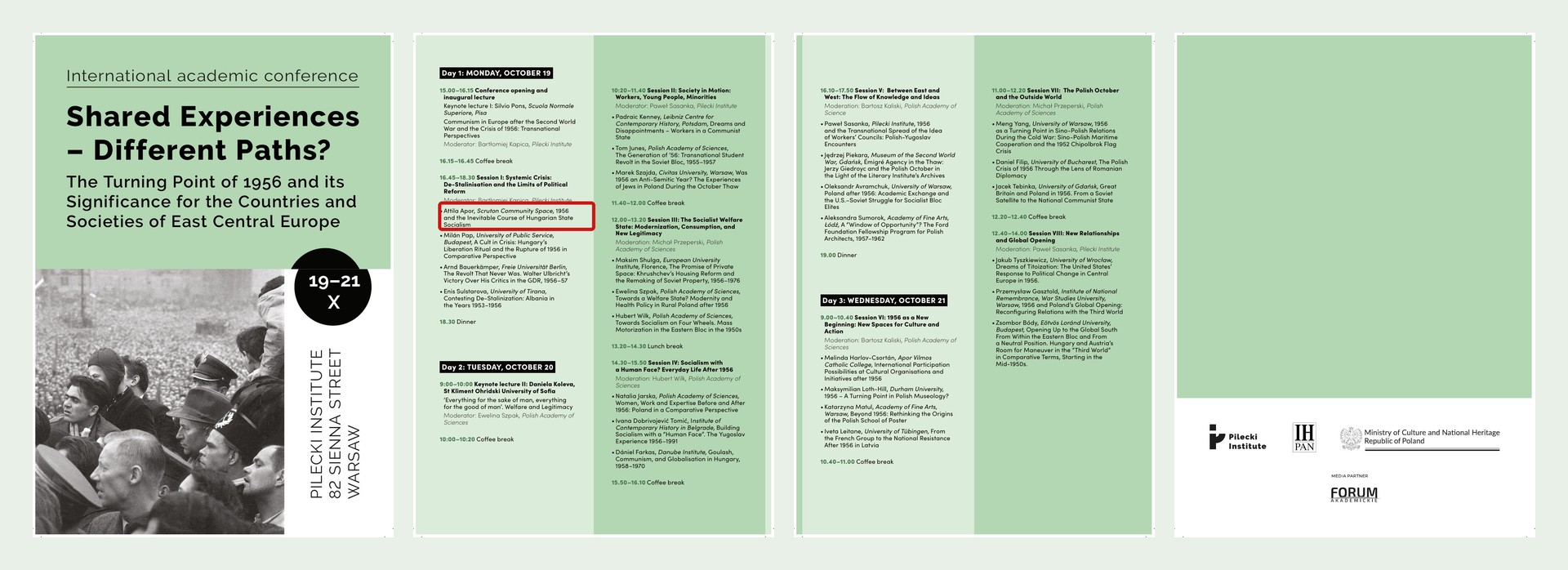
The four pages of the programme of the Shared Experiences – Different Paths? conference, with Attila Apor’s paper highlighted
Source: Pilecki Institute

További hírek

More news

  • Gomułka and “National Communism” – Attila Apor on Hír FM

    Attila Apor discussed the Polish 1956 and the role of Gomułka on Hír FM’s history programme Farkasverem.

  • Seventy Years – 1956

    Seventy years ago, on 23 October 1956, Budapest students took to the streets to stand by the Polish people – and within hours their demonstration became a revolution.

  • Happy Birthday, East Germany!

    On 7 October 1989 the German Democratic Republic celebrated its fortieth birthday. The evening before, the youth of the party state had marched past Erich Honecker and Mikhail Gorbachev, but many cheered not the host…