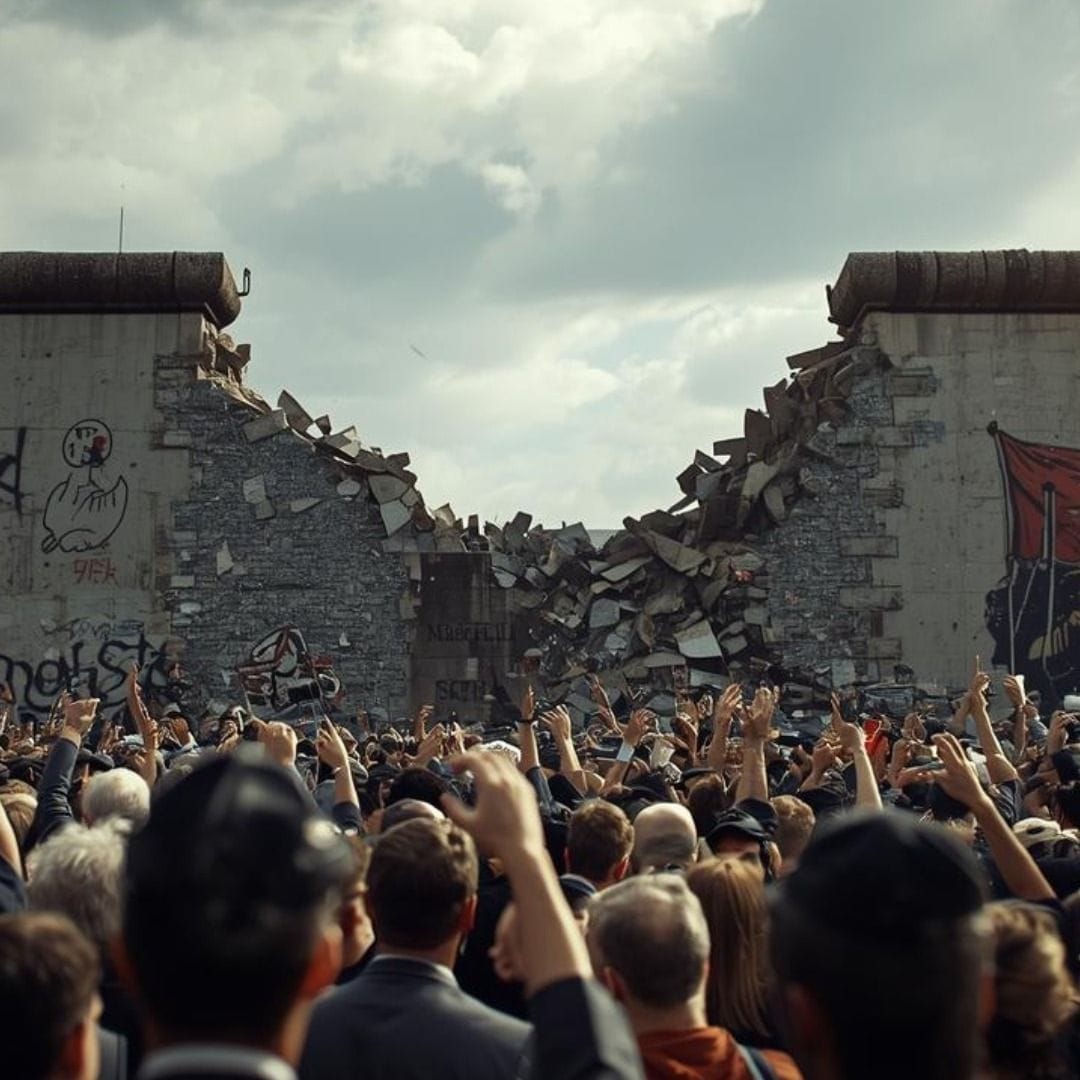
On 7 October 1989 the German Democratic Republic celebrated its fortieth birthday. The evening before, the youth of the party state had marched past Erich Honecker and Mikhail Gorbachev, but many cheered not the host but the Soviet guest. On the evening of the anniversary, thousands were already demonstrating in the streets of East Berlin, demanding change. A month later the Berlin Wall, the symbol of oppression, came down.
In his article published on Szamizdat, Attila Apor recalls this historic sequence of events: the summer of escape, Moscow’s wait-and-see stance, and the day when the East German leadership was still celebrating the past while the future was already unfolding in the streets.
Read the article (in Hungarian): Boldog születésnapot, Kelet-Németország!
Image: Szamizdat